It’s the question on almost every parent’s mind today. You’ve likely seen the shift yourself: the sudden irritability when the tablet goes away, a shrinking attention span during homework, or the nightly battle to get them to sleep.
Naturally, the worry starts to creep in: “Is this just a phase, or is something actually happening to my child’s brain?”
What We’re Seeing in the Clinic
Over the last few years, we’ve seen a significant uptick in families seeking help for attention issues, anxiety, and frequent emotional outbursts. Sometimes, these symptoms point toward a diagnosis like ADHD or an anxiety disorder.
However, we’re increasingly finding that digital habits play a much larger role than many parents realize. It isn’t always about a “disorder”—sometimes, it’s about how a developing brain reacts to a high-speed world.
Why Young Brains Are More Vulnerable
A child’s brain is a work in progress. Because it is still physically developing, it is uniquely sensitive to the “dopamine loops” found in modern technology:
- High Stimulation: Fast-paced videos and gaming provide a level of excitement that real life can’t match.
- Instant Gratification: Likes, wins, and rapid-fire feedback train the brain to expect rewards now.
- Constant Novelty: The ability to scroll or switch apps keeps the brain in a state of perpetual “newness.”
When a brain becomes wired for this level of intensity, everyday life starts to feel, well… boring. Homework, reading, or even a dinner table conversation can feel frustratingly slow, leading to the focus struggles we see so often.
Red Flags of Screen Overload
It’s helpful to look for “signals” that your child’s nervous system might be overstimulated. You might notice:
- “The Transition Meltdown”: Intense anger or distress when it’s time to turn off the device.
- Social Withdrawal: A fading interest in offline hobbies or playing with friends.
- Sleep Disruptions: Difficulty winding down or staying asleep after evening use.
- Mood Swings: Increased irritability that seems to vanish only when they are back online.
These signs don’t necessarily mean something is “wrong” with your child; they are often physiological signals that their brain needs a reset.
Moving Toward Balance (Without the Constant Conflict)
Most parents’ first instinct is to go “cold turkey” or implement rigid, punitive limits. Unfortunately, this often leads to a cycle of power struggles and resentment.
At Kiddo Psychiatry, we’ve found that a more sustainable approach involves predictable routines and gradual structure. It’s not about removing technology entirely—that’s nearly impossible in 2026—but about bringing balance back so that screens don’t dominate their emotional landscape.
When to Seek Professional Guidance
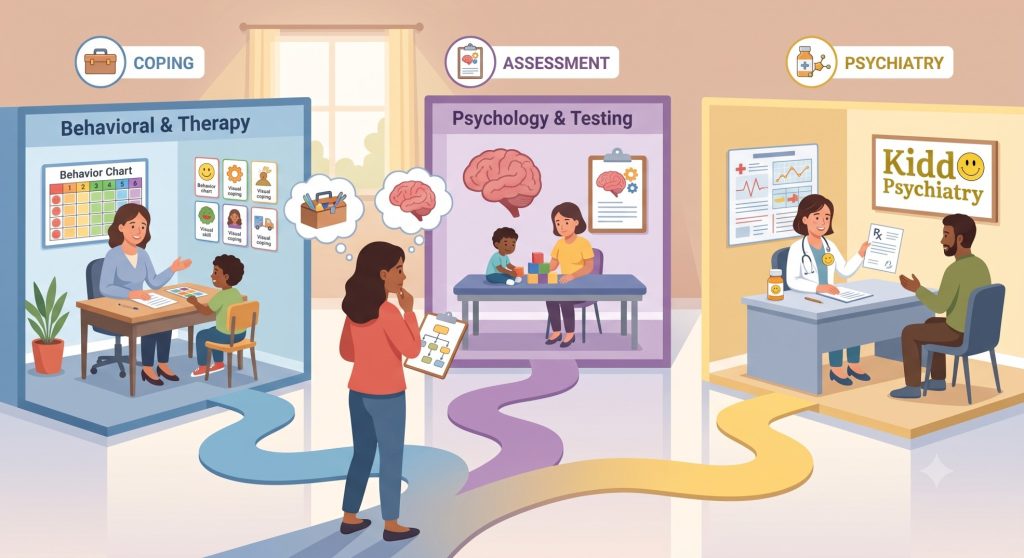
If your child is struggling significantly in school, dealing with paralyzing anxiety, or experiencing emotional outbursts that disrupt your family life, it’s time to take a closer look.
The reality is that it’s rarely just one thing. It could be screen-related, it could be ADHD or anxiety, or—as is often the case—a combination of factors. Getting professional clarity early can prevent years of frustration for both you and your child.