We live in a hyper-connected world today, where screens are everywhere. Smartphones, tablets, smart TVs, you name it, we’ve got it. It’s almost impossible to avoid digital devices. As parents, we are left with a nagging question that never goes away: How much is too much?
Finding the right balance can feel like a moving target, because what works for a teenager definitely doesn’t work for an infant. At Kiddo Psychiatry we consider digital habits through the lens of child development and mental health.
Here’s a no-nonsense, expert breakdown of screen time recommendations from infancy all the way through the teenage years.
The First Years: Babies and Toddlers
The early years of life constitute a sensitive period for brain development. During this period babies learn about the world through human interaction, touch and exploration of their physical environment.
Screen Time for Babies Under 1
The medical consensus is clear when it comes to introducing screen time for babies under 1: it should be avoided completely. The only exception to this rule is good quality video chatting with family members (e.g. grandparents) as this still encourages social connection. Beyond that, the infant brain cannot translate what it sees on a 2D screen to real-world learning.
When is Screen Time OK for Babies?
So when is screen time ok for babies to officially start? Most major paediatric organisations recommend waiting until the child is at least 18 to 24 months old. If you do decide to introduce digital media at this age, it should be high-quality, educational programming only, and you should watch it with your child to help him or her understand what they are watching.
The Preschool Years: Finding the Right Balance
As children enter toddler and preschool years, they are often more curious, and screens are often an easy option for entertainment or quiet time.
Screen Time for 3 5 Year Olds
The golden rule when it comes to managing screen time for 3 5 year olds is moderation and quality content. Passive scrolling or watching mind-numbing videos at this point interfere with active play, language development, and social emotional growth. Experts suggest no more than one hour of non-educational screen time per day.
How Much Screen Time for 4 Year Old Kids Should Have?
So if you’re wondering how much screen time for 4 year old kids is exactly healthy, aim for that one-hour maximum, but break it up into smaller sessions. Consistency is the key. Make sure digital devices don’t replace the core healthy habits of playing outside, reading books together, and getting plenty of sleep.
Adolescence and the Digital Age: Breaking Through
When kids hit their double digits, the way they use screens morphs significantly. They begin to drift away from formal cartoon shows and head to social media, online gaming and texting.
Screen Time Teens Use
Understanding the balance of screen time teens experience is a whole different ball game. For teens, screens are a huge part of their social lives. The advantages of digital connectivity are well known but unfortunately, over-usage is linked to sleep deprivation, body image concerns, increased anxiety and cyberbullying.
Rather than establishing a strict, universal hourly limit for teens, concentrate on instituting healthy tech-free zones:
- The Bedroom Rule: Leave the smartphones and gaming consoles out of the bedroom at night so they can get some quality sleep.
- Media-Free Meals: Designate a family-only, phone-free dinner time for open discussion.
- Balance Real-Life Responsibilities: If they are getting the grades they need to be getting, they are getting physical activity, and they are socialising in real life, then their online habits are likely fine.
How Kiddo Psychiatry Can Help Your Family
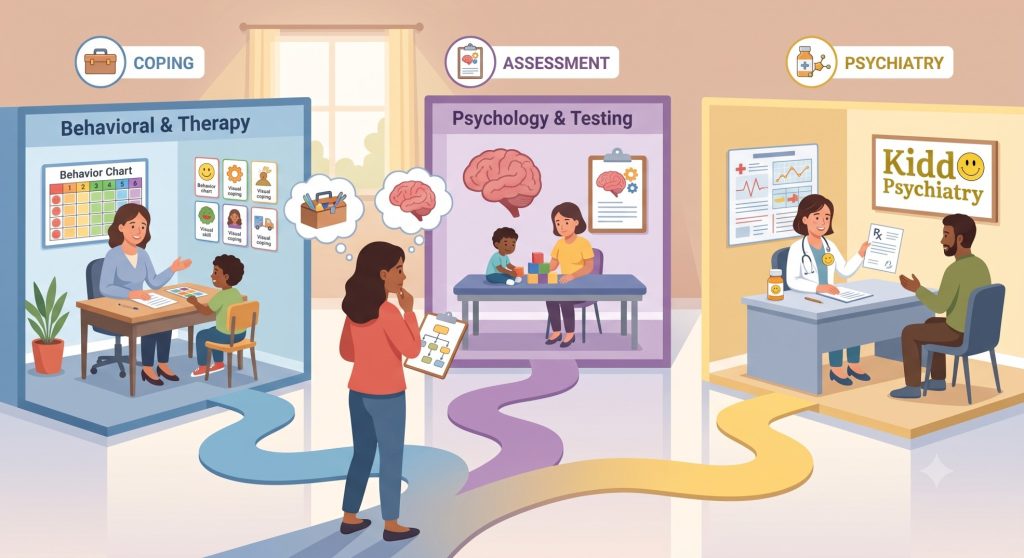
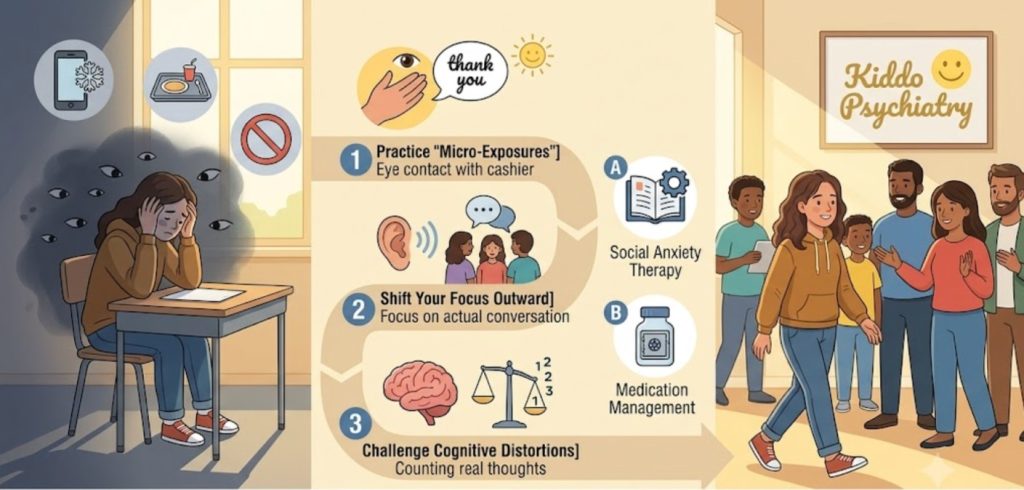
At Kiddo Psychiatry, we often see families dealing with behavioural changes, attention problems, and emotional dysregulation related to poor digital habits. Sometimes, too much screen time is a way of dealing with an underlying condition such as ADHD, anxiety or depression.
If your child or teen is becoming very irritable when devices are taken away, withdrawing or falling behind in school, it might be time for a professional check-in.
Our board-certified psychiatrists offer complete assessments and family support. We have convenient offices in Austin and Houston, and are also offering telehealth appointments all across Texas, so you can get expert care with no waitlist.
Step Into Digital Wellness
Building healthy media habits is a journey and takes patience. You don’t have to do this alone.
Want to help your child’s emotional and behavioural health? Schedule An Appointment Here Or Complete Our Secure Online Intake Form Today. Let’s all work together for a healthier, happier household.