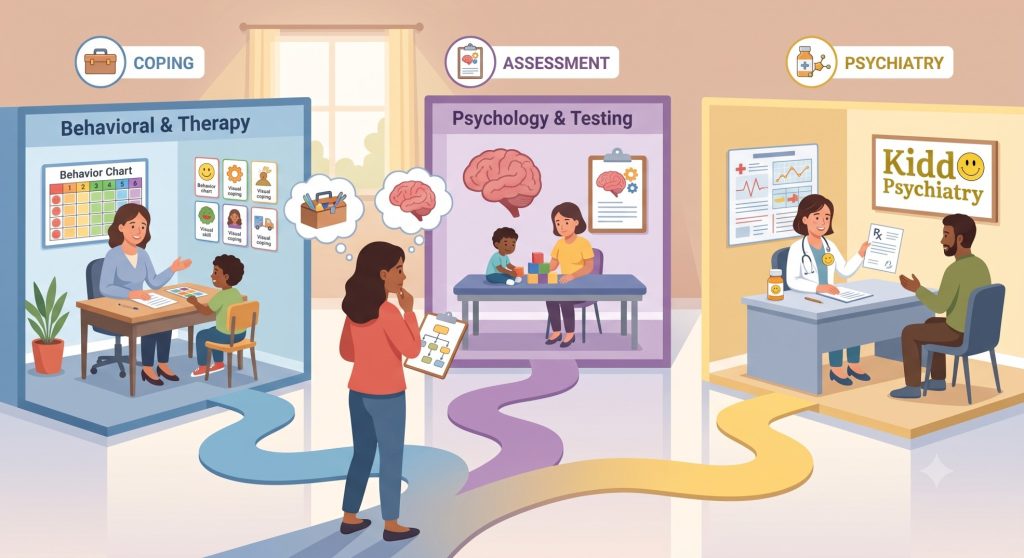
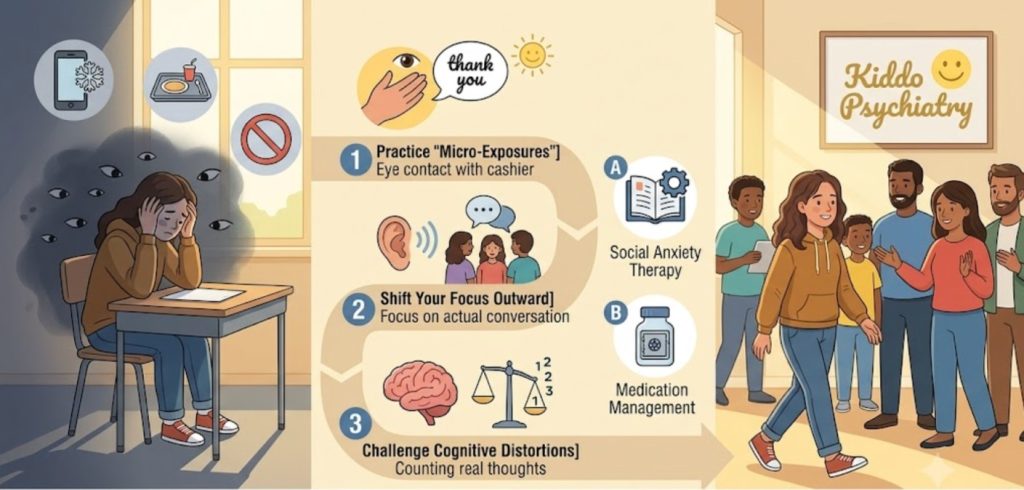
Parents frequently wonder what kind of support the school can offer when a kid is having difficulties in school due to ADHD, anxiety, melancholy, autism, emotional regulation issues, or any mental health condition. A 504 plan for mental health is one solution that might be useful.
For students who require school accommodations for ADHD, anxiety, or other conditions to successfully attend school but may not require special education services, a 504 Plan can be a valuable resource. The procedure can be perplexing for a lot of families. A child psychiatrist 504 plan collaboration can assist by assessing the child’s needs, recording how symptoms impact academic performance, and suggesting workable adjustments that enhance the kid’s everyday functioning, learning, and emotional well-being.
A 504 Plan: What Is It?
For students with a disability that significantly restricts one or more main living activities, a 504 Plan is a school-based accommodation plan. This could include studying, focusing, reading, writing, communicating, controlling emotions, sitting still, finishing tasks, or regularly attending school.
What a child is expected to learn is not altered by a 504 Plan. Rather, it assists in removing obstacles so that the child has equitable access to the educational setting.
For instance, a student with ADHD might comprehend the subject matter but find it difficult to finish exams in the allotted time. Even when a student with anxiety is capable academically, learning how to get a 504 plan for anxiety can help them secure needed assistance with transitions, presentations, or avoiding school. During the school day, a depressed student could want assistance with managing their homework, support for their attendance, or access to a reliable adult.
504 Plan vs IEP Differences: What Is the Distinction?
Both IEPs and 504 Plans are frequently discussed with parents. Understanding the 504 plan vs IEP differences is important, as they are various forms of school assistance.
In a general education setting, accommodations are typically offered by a 504 Plan. Extended time, preferred seating, less distractions, breaks, adjusted workload, and access to emotional support during the school day are a few examples.
When a student requires specialised instruction through special education services, an IEP, or Individualised Education Programme, is usually utilised. Particular educational objectives and services are included in an IEP.
A 504 Plan is necessary for certain students. Some people require an IEP. Some may require a more formal special education review after beginning with a 504 Plan. The child’s symptoms, school performance, and educational needs all influence the appropriate level of help.
Mental Health Issues That Could Be Eligible for a 504 Plan
A kid is not automatically eligible for a 504 Plan based only on a diagnosis. The school considers if the condition significantly hinders the student’s ability to operate in the classroom.
Families may ask for a 504 examination due to the following common mental and developmental disorders:
- ADHD (and the need for school accommodations for ADHD)
- Anxiety disorders
- Depression (requiring specific school accommodations for depression)
- Autism spectrum disorder (autism school accommodations 504)
- Compulsive-compulsive disorder
- Symptoms associated with trauma
- Mood disorders
- Dysregulation of emotions (emotional dysregulation school support)
- Avoiding school (school avoidance 504 plan accommodations)
- Sleep-related issues that impact academic performance
“Does my child have a diagnosis?” is not the only important question. “How does this condition affect my child’s ability to access school?” is the more crucial question.
How a Child Psychiatrist Can Assist
The 504 Plan is not made by a child psychiatrist. Determining eligibility and creating the plan are the responsibilities of the school. On the other hand, a child psychiatrist can be of great assistance.
1. Finishing a Mental Assessment
A child psychiatrist is qualified to assess functional impairment, severity, diagnosis, and symptoms. This could entail going over issues with focus, anxiety, mood, sleep, behaviour, social functioning, academic achievement, and family stress.
This assessment aids in determining whether the child’s difficulties are caused by trauma, ADHD, anxiety, depression, autism, or another disorder. A precise diagnosis can aid the school in comprehending the child’s requirements.
2. Outlining How Symptoms Impact School Performance
Schools must comprehend how a child’s symptoms manifest during the school day. This can be explained practically by a psychiatrist.
For instance:
- A youngster with ADHD may struggle to focus, plan assignments, begin chores, follow multi-step directions, or turn in completed work.
- A child who suffers from anxiety may avoid school, struggle with presentations, become overwhelmed during testing, ask reassuring questions repeatedly, or shut down when under stress.
- Low motivation, exhaustion, poor focus, impatience, slowed work completion, or irregular attendance are all signs of depression in children.
- Transitions, sensory overload, social communication, unforeseen changes, and emotional regulation can all be difficult for a child with autism.
Schools frequently benefit more from this kind of functional explanation than from a diagnosis alone.
3. Composing a Child Psychiatrist School Support Letter
A medical professional can provide a child psychiatrist school support letter outlining the kid’s diagnosis, symptoms, and educational needs. A parent’s request for a 504 examination may be supported by this letter.
Typically, a helpful letter consists of:
- The diagnosis of the kid
- How symptoms impact academic performance
- Why it could be medically appropriate to make adjustments
- Overarching suggestions for school assistance
- Concerns about safety or emotional control, if applicable
The letter shouldn’t ask the school to do anything in particular. Rather, it ought to offer functional and medical data that aids in the school’s decision-making.
4. Suggested Useful Adjustments
Depending on the child’s needs, a psychiatrist may recommend adjustments. These suggestions have to be precise, doable, and related to the child’s symptoms.
Potential lodgings could consist of:
- Extra time for homework and tests
- Testing in a less distracting environment
- Preferential seating
- In addition to spoken instructions, written instructions
- Dividing tasks into manageable chunks
- Check-ins with a responsible adult
- Availability of breaks when feeling overburdened
- Adjusted homework load when clinically necessary
- Assistance with planning and monitoring assignments
- Decreased punishment for disability-related symptoms
- A strategy for unfinished work following absences
- Assistance during changes
- Permission to utilise sensory aids or coping mechanisms
- A strategy for a phased return to school following illness or avoidance
- Other possibilities for presentations in cases of extreme anxiety
The greatest lodgings are customised. A proper 504 Plan should take into account the child’s real symptoms and academic difficulties.
5. Facilitating Parental-School Communication
When attempting to communicate their child’s needs to educators, counsellors, or administrators, many parents experience feelings of overwhelm. A child psychiatrist can assist parents in organising and effectively communicating their concerns.
Parents could be urged to explain:
- The child’s challenges at school
- How frequently the issue arises
- What has already been attempted
- What appears to be beneficial
- How symptoms impact behaviour, emotional health, attendance, and grades
- What modifications could make it easier for the youngster to attend school?
The 504 process can be more effective if there is clear communication.
6. Tracking the Effectiveness of the Plan
A 504 Plan shouldn’t be kept in a file. It ought to be examined and modified if necessary.
A child psychiatrist can assist in keeping an eye on how well the accommodations are working. The psychiatrist may suggest further actions, such as therapy, medication modifications, parent coaching, school counselling support, occupational therapy evaluation, or a special education evaluation, if the kid still has difficulties in spite of a 504 Plan.
When Is It Time for Parents to Request a 504 Plan?
If a child’s functioning or access to school is being hampered by a diagnosed or suspected disability, parents may want to request a 504 evaluation.
The following are indicators that a youngster could require assistance:
- Regular avoidance of school
- School-related panic or shutdowns
- Despite effort, grades are declining.
- Having trouble finishing or submitting assignments
- Excessive test anxiety
- Frequent outbursts of emotion at school
- Having trouble focusing or remaining sat
- Frequent disciplinary problems pertaining to impulsivity or emotional control
- Transitional issues or sensory overload
- Excessive exhaustion, a lack of drive, or difficulty focusing
- Frequent absences due to symptoms of mental illness
Typically, parents can submit a written request for a 504 evaluation to the principal, school counsellor, or 504 coordinator.
What Is Not Possible with a 504 Plan
Although a 504 Plan can be quite beneficial, it cannot treat mental health issues like depression, anxiety, or ADHD. Additionally, it does not take the role of therapy.
In contrast to an IEP, a 504 Plan usually does not offer specialised education. Additionally, expectations shouldn’t be lowered without a good reason. Making school “easy” is not the aim. Making education accessible is the aim.
For many kids, the best results are achieved when school adjustments are combined with therapy, appropriate treatment, parent support, and frequent home-school contact.
Concluding Remarks
A 504 Plan can make it easier for kids with developmental and mental health issues to attend school. The appropriate modifications can lower needless obstacles and enable children with ADHD, anxiety, depression, autism, emotional dysregulation, or school avoidance reach their full potential.
A child psychiatrist can assist with this process by offering a thorough assessment, outlining how symptoms impact academic performance, suggesting suitable accommodations, and assisting families in effectively and clearly advocating.
A psychiatric evaluation might be a helpful first step in figuring out what your child needs and how to support them if they are having academic difficulties and you are wondering if a 504 Plan might help.