As parents, we are always measuring what is “normal.” We know childhood is a series of phases mood swings, growing pains, academic hurdles. But there are many times when a parent’s intuition tells them there may be something more, leading them to look for clear signs your child needs mental health help.
Going to a child psychiatrist is not about labeling your child; it’s about understanding how they see the world, so you can help them with the right tools to succeed. Knowing when a child needs to see a psychiatrist or behavioral expert is simply a proactive step toward their well-being.
What to Look for: Child Behavior Red Flags
All kids have bad days, but we are looking for patterns that stick around and keep them from enjoying life. If you notice these distinct signs a child needs extra support, feel free to contact me:
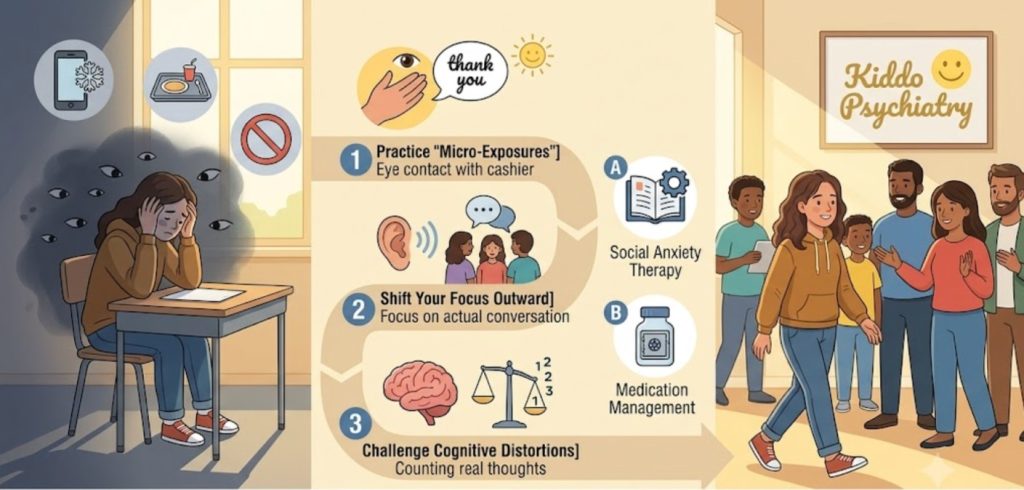
- Constant Worry: Intractable worries or child anxiety symptoms that continue despite reassurance, or that interfere with school or social participation.
- Behavioral Red Flags: Problems with concentration, impulsivity, or “acting out” that regularly lead to problems at school or home.
- Emotional Intensity: Episodes of intense explosions or a constant “low” mood that seems out of proportion to the circumstances.
- Regression or Changes: Noticeable changes in sleep patterns, eating habits, or a loss of interest in hobbies they once loved.
- The Impact Factor: The most important thing is if these problems are hurting their self-esteem, friendships, or academic progress.
What Does a Psychiatric Assessment Really Look Like?
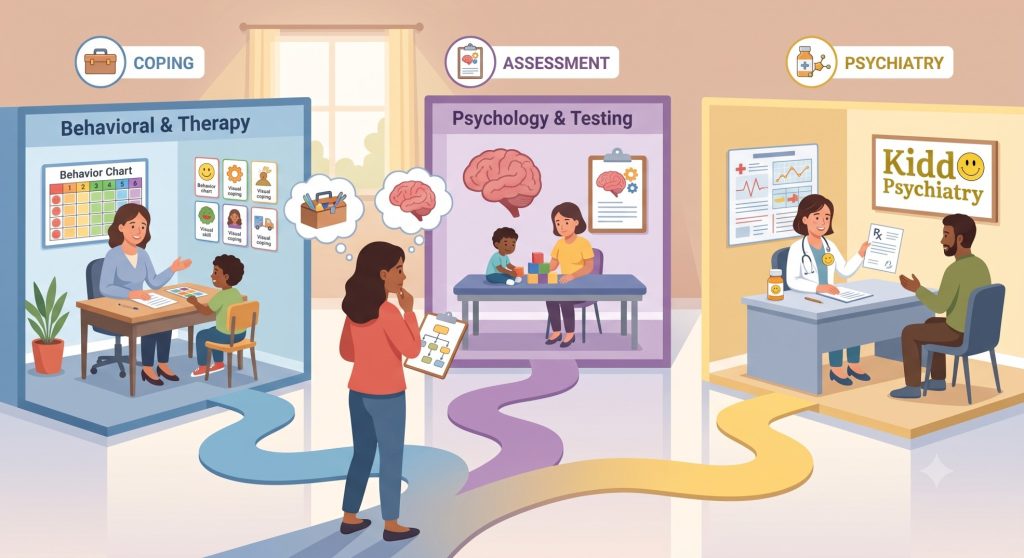
Often people think that a visit to a psychiatrist is only about medication. What actually happens during a comprehensive child psychiatric evaluation at Kiddo Psychiatry is a holistic “deep dive.” We want to connect the dots between:
- Biological Factors: Understanding genetics and brain development.
- Environmental Influences: Looking at the role of school, peer groups, and digital lifestyles.
- Psychological Factors: How your child deals with emotions and stress.
The result is not just a diagnosis; it is a blueprint. This plan may include behavioral strategies, therapy recommendations, school accommodations, or, when clinically appropriate, a conversation about medication.
“Wait and See” Versus “Act and Clarify”
Many families wait until a crisis hits to get help. But the sooner you address behavioral problems in children, the better your chances of avoiding a long struggle. Finding clarity does not mean your child is “broken,” but that you are being proactive about their mental and emotional health.
If you’re feeling like your current strategies at home aren’t moving the needle, it may be time for a professional perspective to help your child thrive.
Discovering the “Why” Behind the Behavior At Kiddo Psychiatry, we look beyond symptoms to the child behind them. We collaborate with your family to get your child the support they need to succeed.
👉 Not sure if your child needs an assessment? Find out more about our process at Kiddo Psychiatry and see how we help families find the way forward.